What do you do?
One of the first questions we ask a person we’ve just met is “What do you do?” It’s taken for granted that we’re speaking about their occupation in general, and therefore that this question is different from the more specific “What are you doing?”
The present simple is called “simple” precisely because it gives only the minimum information that the situation is in the present, and doesn’t generally refer to specific, dynamic or changing situations. This is a bit different from Italian, which doesn’t limit “il presente” with the adjective “semplice”, making it possible to use it in many cases where other forms are preferred in English because they give more information.
We can see these two functions if we compare a general, stable situation with a temporary, dynamic one:
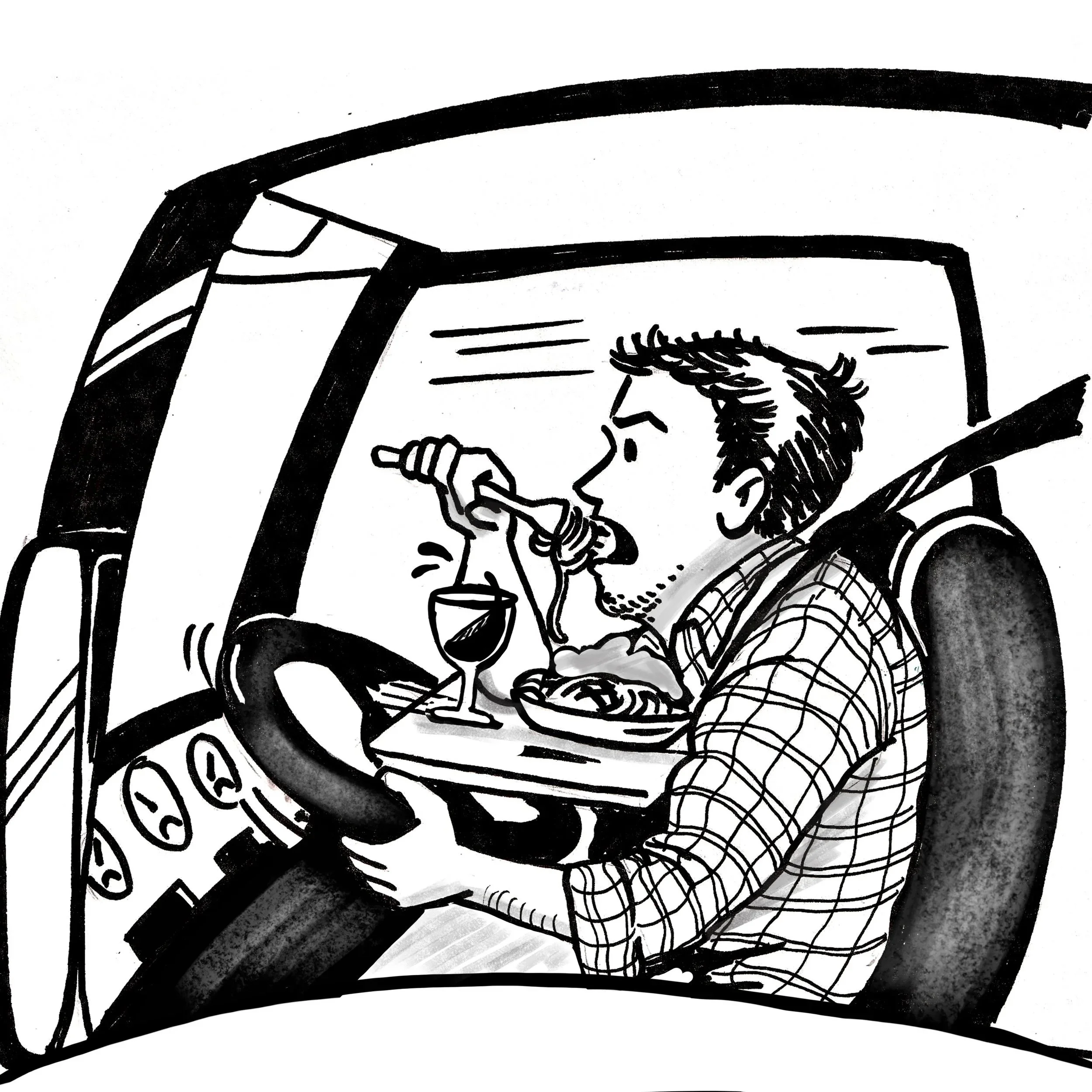
“What do you do?” “I’m a truck driver.”
This is the usual, general activity of the speaker.
“What are you doing?” “I’m having lunch.”
This is a specific action in progress at the moment.
He habitually drives a truck, because it’s his job. But we hope he’s not driving it at the moment, because if he is he could be a danger to other drivers as well as to himself.